You have no items in your shopping cart.


Rosenthal »Kumi«
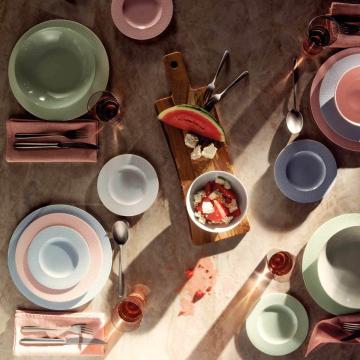
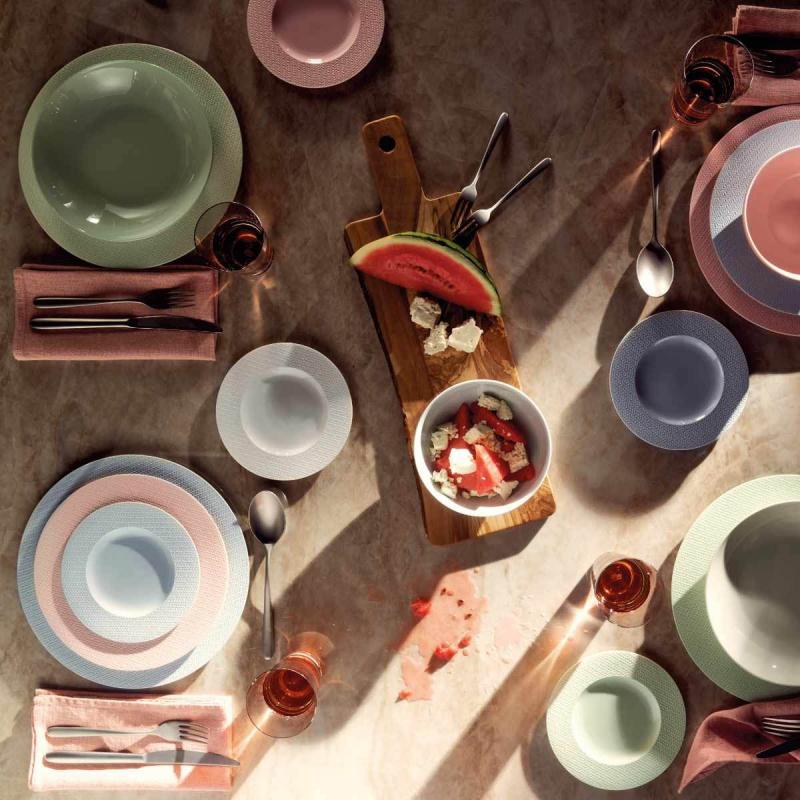
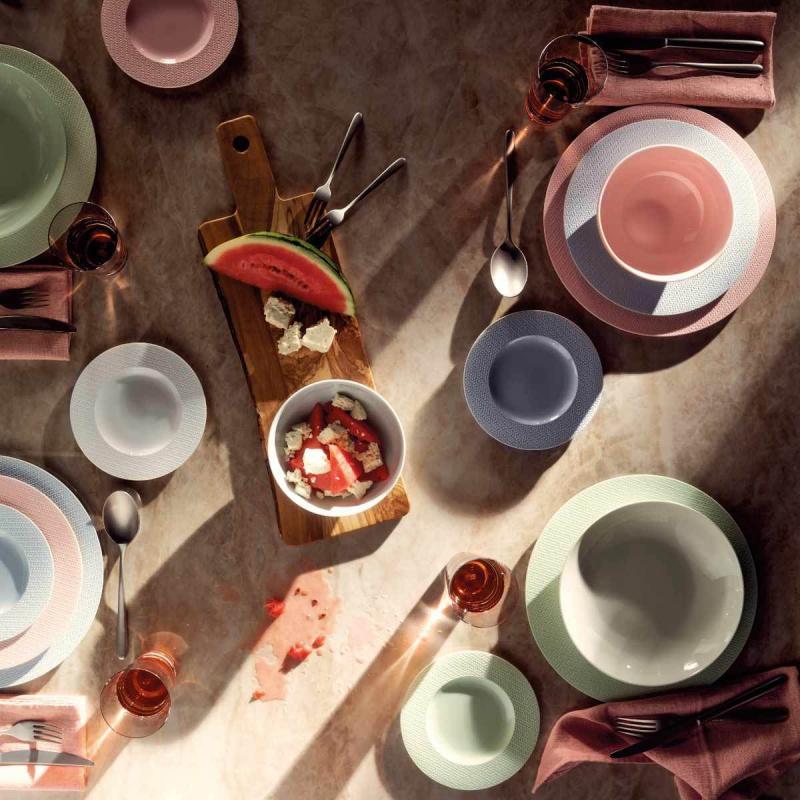
The woven pattern is the central design element of the porcelain »Kumi« by Rosenthal. The collection is named after the Japanese braiding technique »Kumihimo«. »Kumi« means »braid« in Japanese, and »Himo« means »rope«. This traditional braiding art allows for the creation of patterned bands and cords. In the porcelain series Rosenthal »Kumi«, braided structures are used in the form of subtle reliefs: The plates feature the attractive woven pattern on their wide rim, while the cups and bowls are embossed on the outside. These areas with braided decor remain unglazed, i.e., matte, which enhances the relief's expression. The lines and shapes of the bread, breakfast, dinner, and soup plates, as well as the cereal bowls and cups, are deliberately kept puristic in Rosenthal »Kumi«.
A skillful touch of nostalgia is brought into play by the soft pastel colors light blue, pink, mint, and cream white: Blue Tone, Rose Tone, Mint Tone, and White Tone harmonize perfectly with the delicate braided look of »Kumi«. The delicate color scheme subtly emphasizes the contrast between shiny, glazed, and matte, unglazed surfaces. This Rosenthal line is made from silicate porcelain, a particularly break- and chip-resistant material that also appears slightly opaque, highlighting the elegance of the porcelain. With »Kumi«, Rosenthal has created a tableware that appears romantic yet modern, playful yet puristic, and successfully expresses Rosenthal's expertise in sophisticated table culture.
Quality reference
microwave-compatible
dishwasher-safe
Shop By
Filter
- Collection
- Kumi Blue tone (6)
- Kumi Mint tone (6)
- Kumi Rose tone (6)
- Kumi White tone (10)
- Availability
- in stock (26)
- not in stock (2)
- Product type
- Bread plate (4)
- Breakfast plate (4)
- Cereal bowls (4)
- Coffee cups (1)
- Dinner plate (4)
- Espresso cups (1)
- Mug with handle (4)
- Saucers (2)
- Soup plates (4)
- Diameter
- 12 cm (1)
- 15 cm (5)
- 17 cm (4)
- 21 cm (4)
- show another 2
- Capacity
- 0,08 L (1)
- 0,25 L (1)
- 0,34 L (4)
- 0,78 L (4)
- Color
-


Recently Viewed Products
-

Rosenthal Mesh Mountain Flat plate 24 cm
Special price Excl. Tax: €14.20 Incl. Tax: €16.90
Regular Price: Manufacturer's SRP incl. Tax: €26.50
-

Arthur Krupp White River Platter rectangular 34.8 cm
Special price Excl. Tax: €16.72 Incl. Tax: €19.90
Regular Price: €21.90